Cornering Training Level 3
Tire grip, reading the signals and mental stability at the limit – technique as one closed system, on a fully closed circuit.

Tire grip, reading the signals and mental stability at the limit – technique as one closed system, on a fully closed circuit.
In Levels 1 and 2 you took riding technique apart into single building blocks – vision, brake, body position – and learned them in isolation. In Level 3 we put those elements back together into one closed system. Technique is no longer a sequence of steps but a flowing process: every movement acts on several physical parameters at once, and you learn to feel how they hang together.
We do not promise lap times, we promise repeatability. A lucky hit is worth nothing at the limit – only technique you can repeat will carry you.
Whoever goes looking for the limit does not rely on luck – he feels it, understands it and commands it technically.
Secure one of the maximum five places for your Cornering Training Level 3.
4.5 out of 5 from 34 ratings – read the reviews on Google
There are no dates scheduled for Level 3 at the moment. Leave your email and we will write to you as soon as new dates are set – or write to us.
Level 3 is not an entry-level training and not a mass format. It is precise, demanding and reduced to the essentials.
If that is not yet second nature to you, Level 2 is the more sensible next step – Level 3 builds directly on those automatisms.
You have trail braking and hanging off basically in place and want to bring the elements together into one system.
This is not about wanting to go fast, but about being willing to work on the fine detail of riding physics.
You want to build command at the limit before you transfer it to the race track.
Prerequisite: a solid foundation from Level 2 or a comparable level of training. Not there yet? Level 2 lays the groundwork – without it, Level 3 does not lead anywhere.
We no longer work on coarse line errors, but on the fine tuning of riding physics:
You work your way towards the limit of adhesion methodically – not in order to cross it, but in order to locate it exactly. The goal is to use the tire fully without asking too much of it. How lean, brake and throttle share the same grip is described in our article on the traction budget.
Braking, turn-in and acceleration merge into one another. We work on the transition from brake to throttle at the deepest point of lean angle, to take all unrest out of the chassis.
Staying calm and deciding clearly is part of riding technique. You train strategies for actively suppressing panic reactions – shutting the throttle, stiffening up.
Many riders try to force speed. In Level 3 you learn: real speed comes out of clean technique. Whoever rides precisely, holds the line and understands the tire gets faster automatically – at the same level of safety.
You take away one decisive insight: lean angle is not a risk, it is a state you can command.
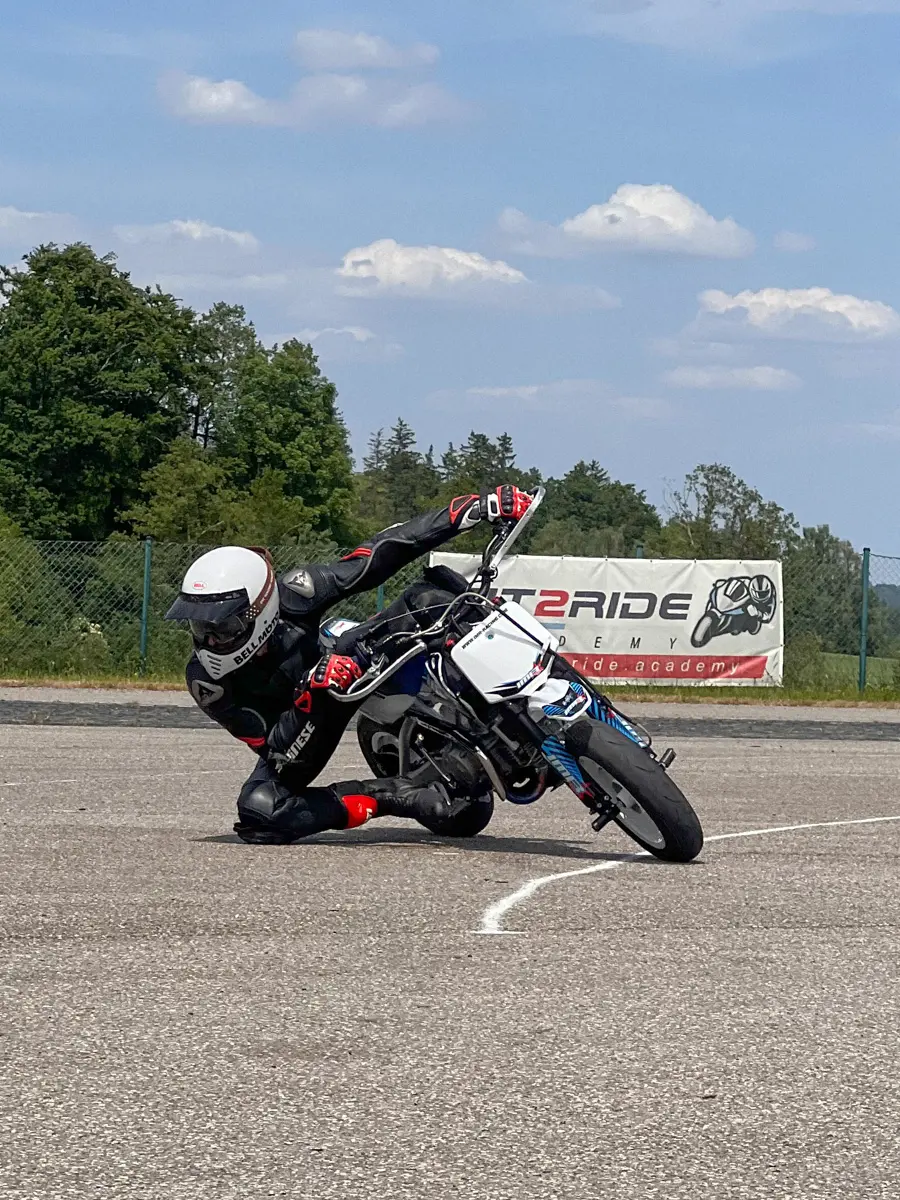
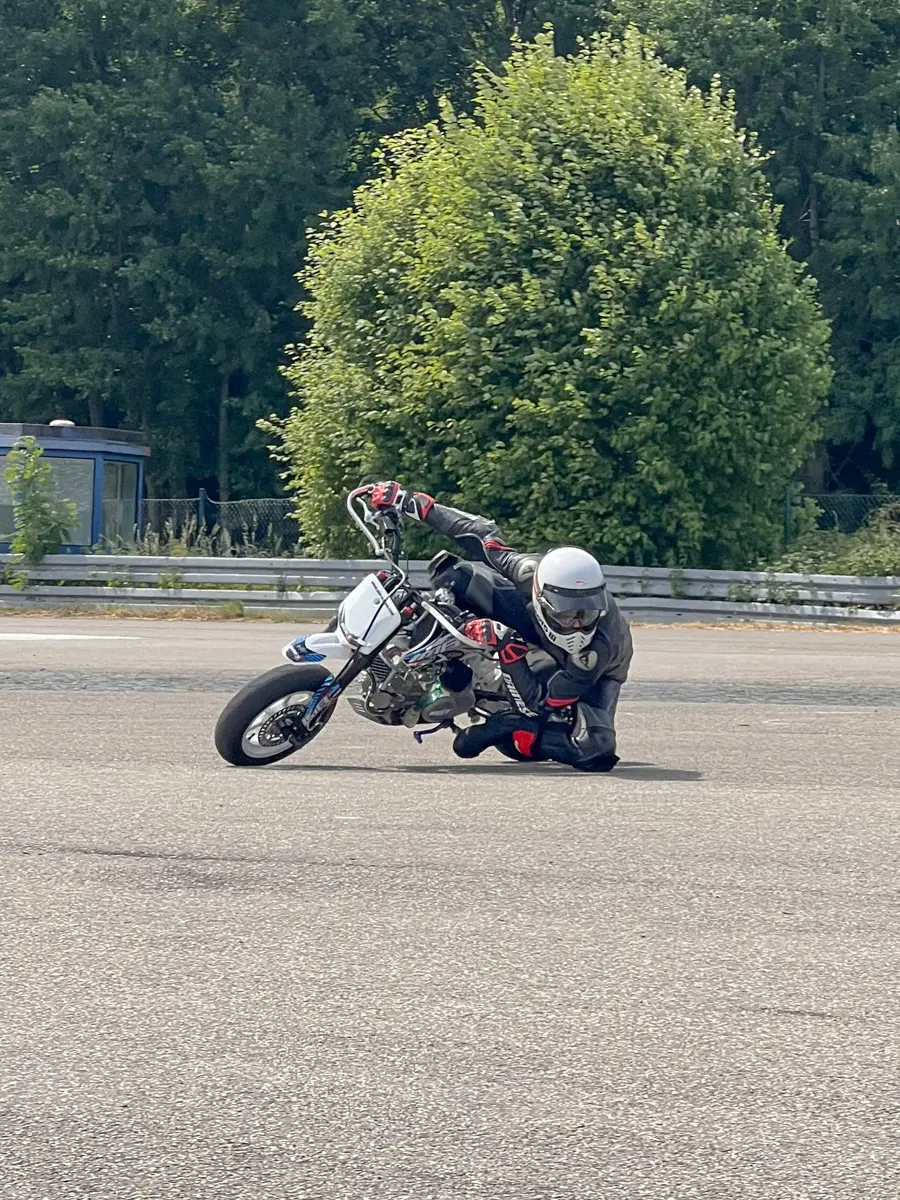
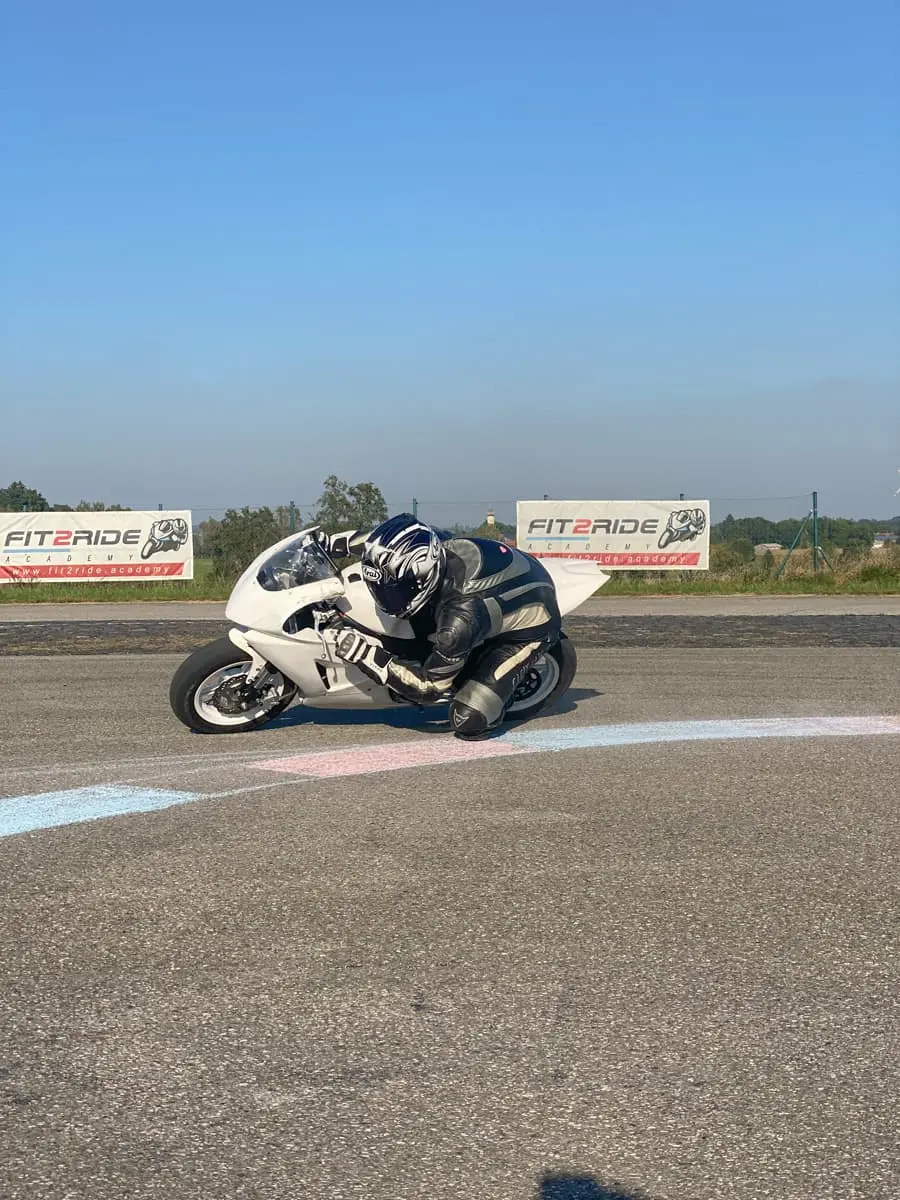
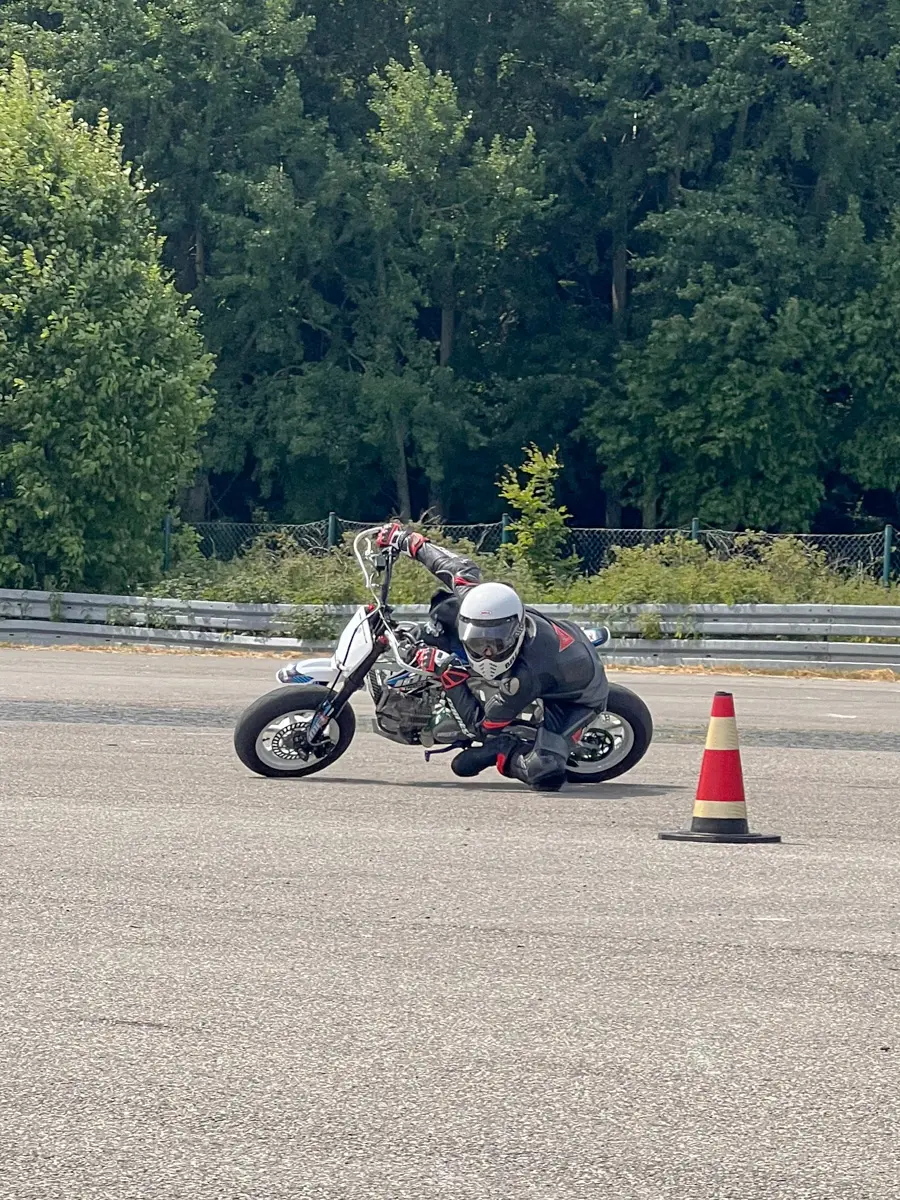
Level 3 is our most demanding training – there is nothing above it. If you want to ride this technique on a circuit, our race track training is the place for it: more room, longer corners and a whole day of time.
To the Race Track Training – view datesYes – Level 3 assumes that trail braking and hanging off are basically in place. Without that foundation from Level 2 (or comparable experience) Level 3 does not lead anywhere; fine tuning needs clean basic technique as its starting point.
No, and deliberately so. We train repeatability, not one good attempt. Real speed is a by-product of clean technique – not a target we promise in numbers.
Tire grip is not a fixed value – it changes with temperature, asphalt and your own inputs. You learn to recognize the feedback of the tire (a light slide, for instance) early and to react to it calmly, instead of experiencing it as a moment of fright.
For the cornering training we provide suitable training motorcycles – you do not need to arrive on your own bike. Full protective gear is mandatory: motorcycle clothing, back protector, gloves, high boots and a full-face or flip-up helmet.
On our closed circuit in 87766 Memmingerberg in the Allgäu (Bavaria), right at the A7/A96 motorway junction – about an hour from Munich, around an hour and a half from Stuttgart.
Level 3 is our most demanding training – there is no higher level. After that it is about applying and repeating it: on a circuit at the race track training, or at another Level 3 date, because the limit feels a little different every time with tires, asphalt and the day you are having.